Introduction
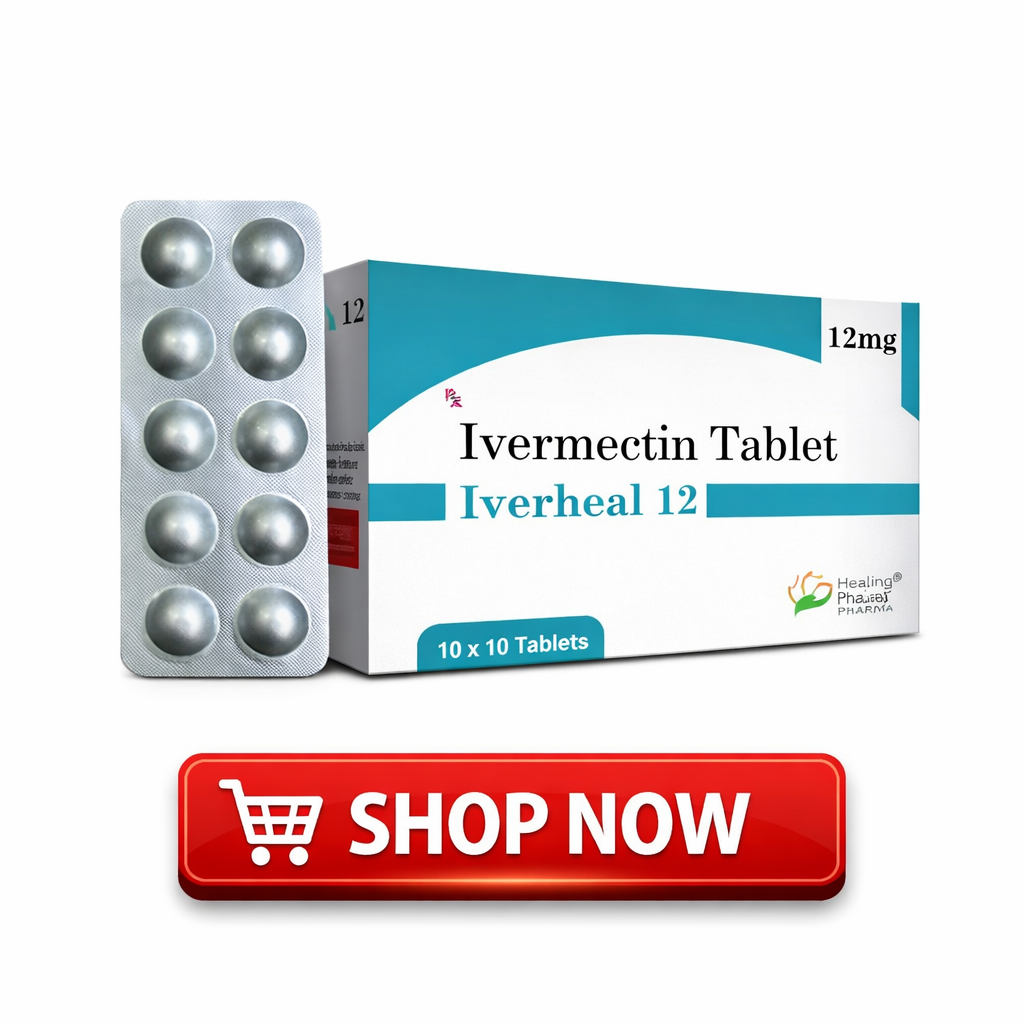
Iverheal 12 mg is an oral antiparasitic medicine containing ivermectin 12 mg. It belongs to a group of medicines called avermectins and is used to treat certain parasitic infections. The product is listed as containing ivermectin 12 mg and is marketed in India as Iverheal 12.
But how does Iverheal 12 mg actually work inside the body?
Ivermectin mainly acts on the nerve and muscle cells of susceptible parasites. It binds to specific glutamate-gated chloride channels, increasing the movement of chloride ions into parasite cells. This causes abnormal electrical activity, paralysis, and eventually death of the parasite.
This article explains the mechanism of Iverheal 12 mg in simple language, along with its uses, expected effects, precautions, side effects, and frequently asked questions.
What Is Iverheal 12 mg?
Iverheal 12 mg is a tablet containing 12 mg of ivermectin, an antiparasitic drug. It is used against certain parasitic infections and should be taken according to a healthcare professional’s instructions.
Ivermectin is classified as an anthelmintic/antiparasitic medicine. Depending on the infection and local prescribing guidance, ivermectin tablets may be used for conditions such as certain intestinal worm infections and onchocerciasis.
The 12 mg strength does not mean that every person should take one 12 mg tablet. Ivermectin dosing can depend on body weight, the parasite being treated, and the patient’s medical circumstances.
How Does Iverheal 12 mg Work?
The main active ingredient in Iverheal 12 mg is ivermectin.
Its mechanism can be understood in four basic steps:
1. Ivermectin reaches the parasite
After oral administration, ivermectin is absorbed into the body and becomes available to act against susceptible parasites.
Following a 12 mg oral dose in fasting healthy volunteers, peak blood concentrations were reached at approximately four hours in pharmacokinetic studies.
2. It targets parasite nerve and muscle cells
Ivermectin selectively binds with high affinity to glutamate-gated chloride channels found in the nerve and muscle cells of many invertebrate parasites.
These channels are important for normal nerve and muscle function in the parasite.
3. Chloride ions enter the parasite cells
When ivermectin activates these channels, the permeability of the cell membrane to chloride ions increases.
This produces hyperpolarization, disrupting normal nerve and muscle signaling.
4. The parasite becomes paralyzed and dies
The resulting disruption prevents the parasite from maintaining normal movement and essential functions. This can cause paralysis and death of the susceptible parasite, helping the body clear the infection.
Simple explanation
Iverheal 12 mg → ivermectin targets parasite chloride channels → nerve/muscle activity is disrupted → parasite becomes paralyzed → parasite dies or is cleared by the body.
Why Does Ivermectin Affect Parasites More Than Humans?
One important feature of ivermectin is its selectivity.
Glutamate-gated chloride channels targeted by ivermectin are characteristic of invertebrate nerve and muscle cells. Mammals do not have these channels in the same way, and ivermectin has relatively low affinity for mammalian ligand-gated chloride channels. It also does not readily cross the blood-brain barrier under normal circumstances.
This selectivity contributes to ivermectin’s antiparasitic activity when it is used at appropriate doses.
However, selective action does not mean that ivermectin is risk-free. Excessive doses can cause serious toxicity, which is why it should be used only as directed.
What Is Iverheal 12 mg Used For?
Iverheal 12 mg is used for certain parasitic infections. The exact approved indications can vary by country and product labeling.
Oral ivermectin is used for conditions including:
- Strongyloidiasis, an intestinal infection caused by Strongyloides stercoralis
- Onchocerciasis, also known as river blindness
- Certain other parasitic infections when specifically prescribed by a healthcare professional
The FDA-approved human tablet labeling specifically identifies intestinal strongyloidiasis and onchocerciasis as indications for oral ivermectin.
Some clinicians may use ivermectin for other parasitic conditions depending on local guidelines and individual circumstances. Such use should be determined by a qualified healthcare professional.
How Does Iverheal 12 mg Help With Worm Infections?
For susceptible worm infections, ivermectin interferes with the parasite’s nervous and muscular activity.
The parasite cannot function normally once these channels are affected. Paralysis and death of susceptible parasites then allow the body to eliminate them.
Importantly, ivermectin is not effective against every type of worm or every stage of every parasite. For example, official labeling notes that its activity against Onchocerca volvulus is directed at tissue microfilariae rather than adult worms, while activity against Strongyloides stercoralis is directed at intestinal stages.
Therefore, the correct medicine and treatment schedule depend on the diagnosed infection.
How Quickly Does Iverheal 12 mg Work?
The timing of clinical improvement depends on the type and severity of infection.
Although ivermectin reaches measurable blood concentrations within hours after an oral dose, this does not mean that all symptoms disappear immediately. The parasite’s elimination and the body’s recovery can take longer.
Some people may notice improvement relatively quickly, while others may require more time or additional treatment according to their diagnosis.
Do not take additional tablets simply because symptoms have not disappeared immediately.
Iverheal 12 mg Dosage
The appropriate ivermectin dose is not determined solely by the tablet strength.
Depending on the condition, ivermectin dosing may be calculated according to:
- Body weight
- Type of parasite
- Severity of infection
- Patient age
- Medical history
- Other medicines being taken
- Whether repeat treatment is required
For this reason, a 12 mg tablet should not automatically be interpreted as a single standard dose for everyone.
Follow the prescription and product instructions provided by your healthcare professional.
How to Take Iverheal 12 mg
If your doctor has prescribed Iverheal 12 mg:
- Take it exactly as directed.
- Swallow the tablet with water unless your prescriber gives different instructions.
- Do not increase the dose yourself.
- Do not repeat the treatment without medical advice.
- Follow any food-related instructions given with your prescription.
Different ivermectin products and prescribing instructions can vary, so the directions on your specific prescription should take priority.
Common Side Effects of Iverheal 12 mg
Ivermectin can cause side effects, although not everyone experiences them.
Possible side effects include:
- Dizziness
- Headache
- Nausea
- Diarrhea
- Vomiting
- Abdominal discomfort
- Skin rash
- Itching
Some symptoms can also occur as the body responds to dying parasites, depending on the infection being treated.
If symptoms are severe, persistent, or unusual, contact a healthcare professional.
Serious Side Effects and When to Seek Medical Help
Seek urgent medical attention if you experience symptoms such as:
- Severe dizziness or difficulty walking
- Confusion or significant drowsiness
- Seizures
- Loss of consciousness
- Severe allergic reaction
- Difficulty breathing
- Facial, tongue, or throat swelling
- Severe or rapidly worsening symptoms
Large or inappropriate doses of ivermectin can be dangerous and have been associated with serious neurological effects, including seizures and coma.
Iverheal 12 mg Precautions
Before taking ivermectin, tell your healthcare professional about your medical history and all medicines or supplements you use.
Particular caution may be necessary in people with:
- Liver problems
- Certain neurological conditions
- A history of significant medication reactions
- Possible Loa loa infection
- A weakened immune system
- Pregnancy or breastfeeding
Your doctor can determine whether ivermectin is appropriate and whether additional monitoring is necessary.
Iverheal 12 mg and Drug Interactions
Ivermectin can interact with other medicines.
The official labeling notes that ivermectin is primarily metabolized through CYP3A4, with CYP2D6 and CYP2E1 also contributing to metabolism.
Tell your doctor about all prescription medicines, over-the-counter products, and supplements you take.
Do not assume that a medicine is safe to combine with ivermectin simply because it is available without a prescription.
Can Iverheal 12 mg Be Used for COVID-19?
Ivermectin should not be used as a self-treatment for COVID-19.
The FDA states that ivermectin tablets are approved for certain parasitic infections but are not authorized or approved for preventing or treating COVID-19 in humans.
Taking higher-than-recommended amounts in an attempt to treat a viral infection can be dangerous.
Iverheal 12 mg vs. Other Antiparasitic Medicines
Iverheal 12 mg contains ivermectin, but it is not interchangeable with every antiparasitic medicine.
Different antiparasitic drugs target different parasites and biological processes. For example, a medicine suitable for one type of worm may not be appropriate for another.
A healthcare professional should select treatment based on the suspected or confirmed parasite.
Frequently Asked Questions
What is Iverheal 12 mg?
Iverheal 12 mg is an oral tablet containing 12 mg of ivermectin, an antiparasitic medicine used for certain parasitic infections.
How does Iverheal 12 mg work?
It binds to glutamate-gated chloride channels in susceptible parasites. This increases chloride permeability, disrupts nerve and muscle activity, and can cause paralysis and death of the parasite.
Does Iverheal 12 mg kill parasites?
Ivermectin can kill or disable susceptible parasites by disrupting their nervous and muscular function. However, its effectiveness depends on the specific parasite and stage of infection.
Is Iverheal 12 mg an antibiotic?
No. Iverheal 12 mg contains ivermectin and is an antiparasitic medicine, not an antibiotic.
Can I take Iverheal 12 mg without a prescription?
It is best to use ivermectin only under appropriate medical guidance. The correct dose depends on the condition and patient factors.
Does one 12 mg tablet work for everyone?
No. A 12 mg tablet is a strength, not a universal dose. Ivermectin treatment is commonly determined according to factors such as body weight and the infection being treated.
Can I take another tablet if I still have symptoms?
Do not automatically repeat the dose. Persistent symptoms may have several causes, and taking extra ivermectin can increase the risk of adverse effects.
Does Iverheal 12 mg work against all worms?
No. Ivermectin is active against certain parasites and particular life-cycle stages. It is not a universal treatment for every worm infection.
Final Thoughts
Iverheal 12 mg works primarily through the ivermectin molecule’s action on chloride channels in susceptible parasites. By increasing chloride-ion permeability, ivermectin disrupts the parasite’s nerve and muscle function, leading to paralysis and death.
The medicine can be effective when the correct parasite and treatment regimen have been identified. However, 12 mg should not be treated as a standard dose for every person or every infection.
For safe treatment, use Iverheal 12 mg only according to the directions of a qualified healthcare professional and avoid taking extra doses without medical advice.