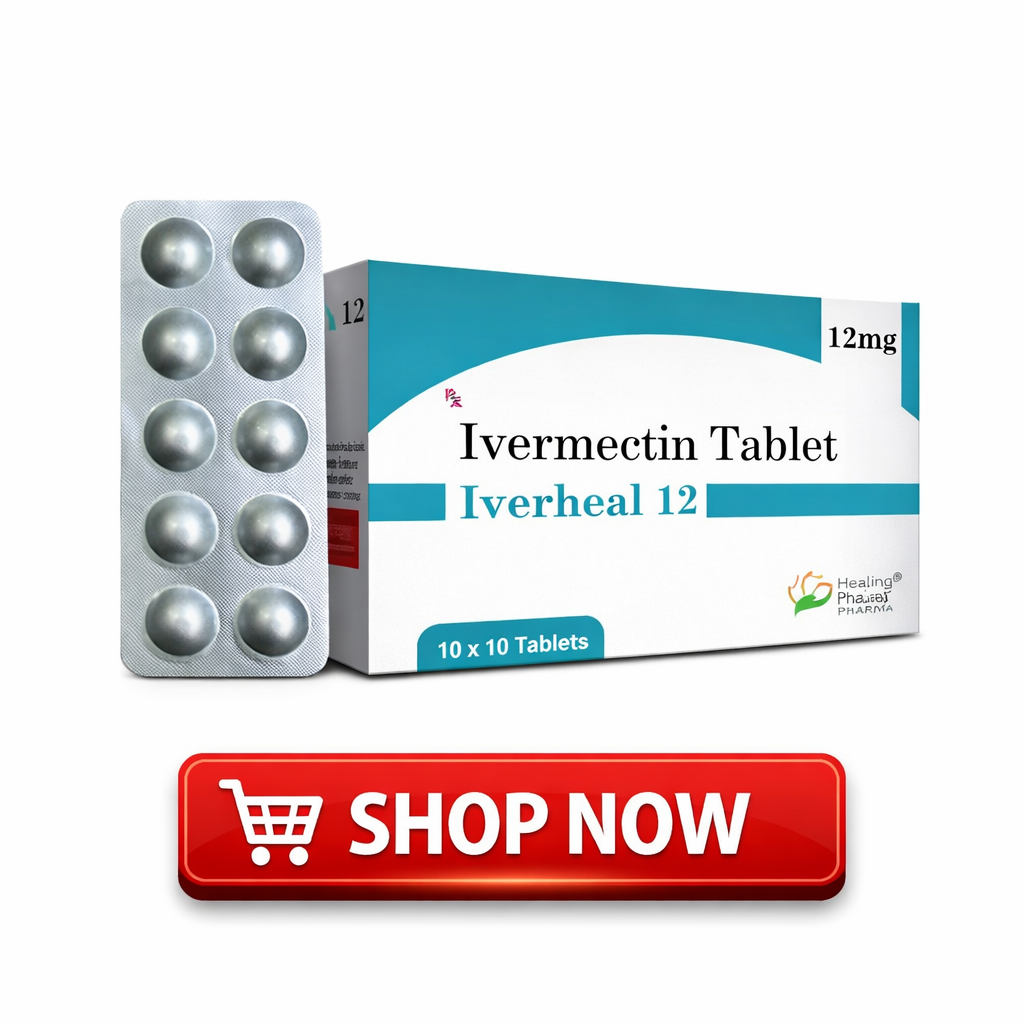
Iverheal 12 mg contains ivermectin, an antiparasitic medicine used to treat certain parasitic infections. Ivermectin works against particular parasites by interfering with their nervous-system function, helping eliminate them from the body.
However, ivermectin is not a general-purpose treatment for infections. The appropriate dose and treatment schedule depend on the specific parasite, the patient’s body weight, age, medical history, and other medicines being taken.
What Is Iverheal 12 mg?
Iverheal 12 mg is a tablet containing 12 mg of ivermectin. Ivermectin belongs to a class of medicines called antiparasitic agents.
Human ivermectin tablets are used for certain parasitic worm infections. For example, ivermectin is an established treatment for intestinal strongyloidiasis, and it is also used for onchocerciasis (river blindness).
The 12 mg strength does not mean that every patient should take one 12 mg tablet. Ivermectin dosing is generally calculated according to body weight and the infection being treated.
What Is Iverheal 12 mg Used to Treat?
Ivermectin may be prescribed for several parasitic conditions, depending on local treatment guidelines and a healthcare professional’s assessment.
1. Strongyloidiasis
Strongyloidiasis is an intestinal infection caused by the parasitic worm Strongyloides stercoralis.
Ivermectin is a first-line treatment for uncomplicated strongyloidiasis. CDC guidance lists oral ivermectin at 200 micrograms per kilogram for 1–2 days for this infection.
People with persistent infection may require follow-up testing and, in some cases, additional treatment.
2. Onchocerciasis
Ivermectin is also used to treat onchocerciasis, a parasitic infection caused by Onchocerca volvulus. The medicine reduces the number of microfilariae, which are immature forms of the parasite.
Treatment may require additional doses at intervals determined by a healthcare professional.
3. Scabies
Oral ivermectin is also used in some treatment guidelines for scabies, although its regulatory approval varies by country.
CDC guidance describes oral ivermectin at 200 micrograms/kg per dose, generally with a second dose 7–14 days later for classic scabies.
Topical treatments such as permethrin may be preferred or used instead, depending on the patient and clinical circumstances.
4. Certain Other Parasitic Infections
Ivermectin may sometimes be prescribed for other parasitic infections under specific circumstances. Such uses can be country-specific or off-label, so patients should not select ivermectin treatment based solely on symptoms.
How Does Ivermectin Treatment Work?
Ivermectin acts on nerve and muscle cells of susceptible parasites. It increases the effect of certain chloride channels, disrupting the parasite’s nervous-system function and eventually causing paralysis and death of susceptible parasites.
The medicine is therefore useful against particular parasites, but it does not work against every type of infection.
Iverheal 12 mg Dosage
The correct ivermectin dose is not determined simply by the tablet strength.
For several parasitic infections, ivermectin dosing is calculated using body weight. For example, CDC guidance recommends 200 micrograms/kg for uncomplicated strongyloidiasis, while treatment schedules differ for conditions such as scabies and onchocerciasis.
Therefore, patients should not automatically take one Iverheal 12 mg tablet because it contains 12 mg of ivermectin.
A healthcare professional may consider:
- Body weight
- Type of parasitic infection
- Severity of infection
- Age
- Pregnancy or breastfeeding
- Liver and other health considerations
- Other medicines being taken
- Previous treatment and response
Do not increase, repeat, or extend ivermectin treatment without medical advice.
How Should Iverheal 12 mg Be Taken?
Follow the prescription and instructions supplied by your healthcare professional.
For some approved human ivermectin tablet uses, the medicine is taken orally as a dose based on body weight. MedlinePlus advises taking ivermectin exactly as directed and not taking more or more frequently than prescribed.
The administration instructions can differ according to the condition being treated. For example, some ivermectin treatment guidelines recommend taking the medicine on an empty stomach, while CDC scabies guidance recommends taking oral ivermectin with food to increase bioavailability.
For this reason, follow the instructions specifically provided for your diagnosis.
Iverheal 12 mg Treatment for Scabies
Scabies is caused by microscopic mites that burrow into the skin and cause intense itching and a rash.
For classic scabies, CDC guidance lists topical permethrin 5% as a first-line option and also describes oral ivermectin as an option at 200 micrograms/kg per dose, with two doses generally given 7–14 days apart.
Ivermectin has limited activity against scabies eggs, which is one reason a repeat dose may be needed.
For crusted scabies, treatment can be more intensive and may involve oral ivermectin combined with topical therapy. Such cases require medical supervision.
Iverheal 12 mg Treatment for Strongyloidiasis
Strongyloidiasis can sometimes remain in the body for years and may become particularly serious in people receiving immunosuppressive treatment.
CDC identifies ivermectin as first-line therapy for strongyloidiasis, with a recommended dose of 200 micrograms/kg orally for 1–2 days in uncomplicated cases.
People with persistent infection may need follow-up stool examinations. Severe or disseminated strongyloidiasis requires urgent specialist treatment and a different treatment approach.
Possible Side Effects of Ivermectin
Ivermectin is generally well tolerated when used appropriately, but side effects can occur.
Possible side effects include:
- Nausea
- Vomiting
- Diarrhea
- Stomach discomfort
- Dizziness
- Weakness
- Loss of appetite
- Constipation
Some reactions may be related to the death of parasites rather than direct toxicity from the medicine. In onchocerciasis treatment, additional reactions can occur as the body responds to dying microfilariae.
Serious Reactions That Need Medical Attention
Seek urgent medical attention if severe symptoms develop, such as:
- Severe dizziness or fainting
- Confusion
- Problems with balance or coordination
- Seizures
- Severe allergic reactions
- Difficulty breathing
- Significant swelling
- Loss of consciousness
Taking excessive amounts of ivermectin can be dangerous and may cause neurological effects, low blood pressure, seizures, coma, and other serious complications.
Who Should Be Careful With Ivermectin?
Tell your doctor before using ivermectin if you:
- Are pregnant or planning pregnancy
- Are breastfeeding
- Have liver problems
- Have an immune-system disorder
- Have previously had an allergic reaction to ivermectin
- Take prescription or non-prescription medicines
- Have recently lived in or traveled to areas where Loa loa infection occurs
People with possible Loa loa infection require particular caution because ivermectin can cause serious neurological reactions in certain patients with high levels of Loa loa microfilariae.
Ivermectin Drug Interactions
Ivermectin can interact with other medicines.
Tell your healthcare professional about all medicines, vitamins, supplements, and herbal products you take. Particular caution may be needed with some medicines, including certain drugs that affect the central nervous system or blood clotting.
Do not start another medicine alongside Iverheal 12 mg without checking whether the combination is appropriate.
Iverheal 12 mg and COVID-19
Ivermectin should not be promoted or used as a treatment for COVID-19 without appropriate medical guidance.
The FDA states that ivermectin has not been authorized or approved for preventing or treating COVID-19 in humans and that available clinical trial data do not demonstrate effectiveness for COVID-19.
Iverheal 12 mg should therefore not be taken for COVID-19 based on internet claims or self-treatment advice.
Can You Take Ivermectin Without a Prescription?
It is best to use ivermectin only when a qualified healthcare professional has determined that it is appropriate.
The symptoms of parasitic infections can overlap with other conditions. Taking ivermectin without confirming the underlying condition can result in ineffective treatment, unnecessary side effects, or delayed diagnosis.
A legitimate human formulation should be used rather than veterinary ivermectin products. The FDA specifically warns against using animal ivermectin products in humans because their formulations and concentrations may differ.
What Happens If You Miss a Dose?
The correct response depends on the treatment schedule prescribed for your infection.
Because ivermectin is often administered as a single dose or as a specific short course, do not automatically double the next dose.
Contact your healthcare professional or pharmacist for instructions if you miss a scheduled dose.
How Long Does Ivermectin Treatment Take?
Treatment duration depends on the infection.
Some infections may require a single dose, while others require multiple doses or follow-up treatment. For example, CDC recommends ivermectin for strongyloidiasis for 1–2 days in uncomplicated cases, whereas scabies generally requires a repeat dose.
Do not assume that taking ivermectin for a longer period will provide better results.
Important Safety Tips
When using Iverheal 12 mg:
- Use it only for a diagnosed or suspected condition for which a healthcare professional recommends ivermectin.
- Follow the prescribed dose based on your body weight and condition.
- Do not take extra tablets to make treatment work faster.
- Do not use veterinary ivermectin.
- Tell your doctor about all other medicines you take.
- Inform your doctor if you are pregnant or breastfeeding.
- Seek medical attention for severe or unusual reactions.
- Complete follow-up testing when recommended.
Frequently Asked Questions
Is Iverheal 12 mg the same as ivermectin?
Iverheal 12 mg is a branded tablet containing ivermectin. The exact product composition and regulatory status should be confirmed from the product packaging and local medicines authority.
Is 12 mg ivermectin a standard dose for everyone?
No. Ivermectin dosing is commonly weight-based and depends on the infection being treated. A 12 mg tablet should not automatically be considered a complete dose for every patient.
Can Iverheal 12 mg treat scabies?
Oral ivermectin is included in CDC treatment guidance for scabies at a weight-based dose, generally with repeat treatment. Treatment choice should be made by a healthcare professional.
Can Iverheal 12 mg treat worms?
Ivermectin treats certain parasitic worms, including the worms responsible for strongyloidiasis and onchocerciasis. It does not treat every type of intestinal worm, so diagnosis is important.
Can Iverheal 12 mg be used for COVID-19?
Ivermectin is not authorized or approved by the FDA for prevention or treatment of COVID-19.
Can I take ivermectin without knowing which parasite I have?
Self-treatment is not recommended. Different parasitic infections can require different medicines and dosing schedules.
Conclusion
Iverheal 12 mg contains ivermectin, an antiparasitic medicine used for specific parasitic infections. It can be an effective treatment when the correct dose and treatment schedule are selected for the particular infection.
Because ivermectin dosing can depend on body weight, diagnosis, age, medical history, and other medicines, patients should not use Iverheal 12 mg simply because they have symptoms that might be caused by parasites.
For safe treatment, obtain a proper diagnosis, use human ivermectin from a legitimate source, follow the prescribed instructions, and seek medical advice if symptoms persist or serious side effects occur.